
Last updated November 22, 2026
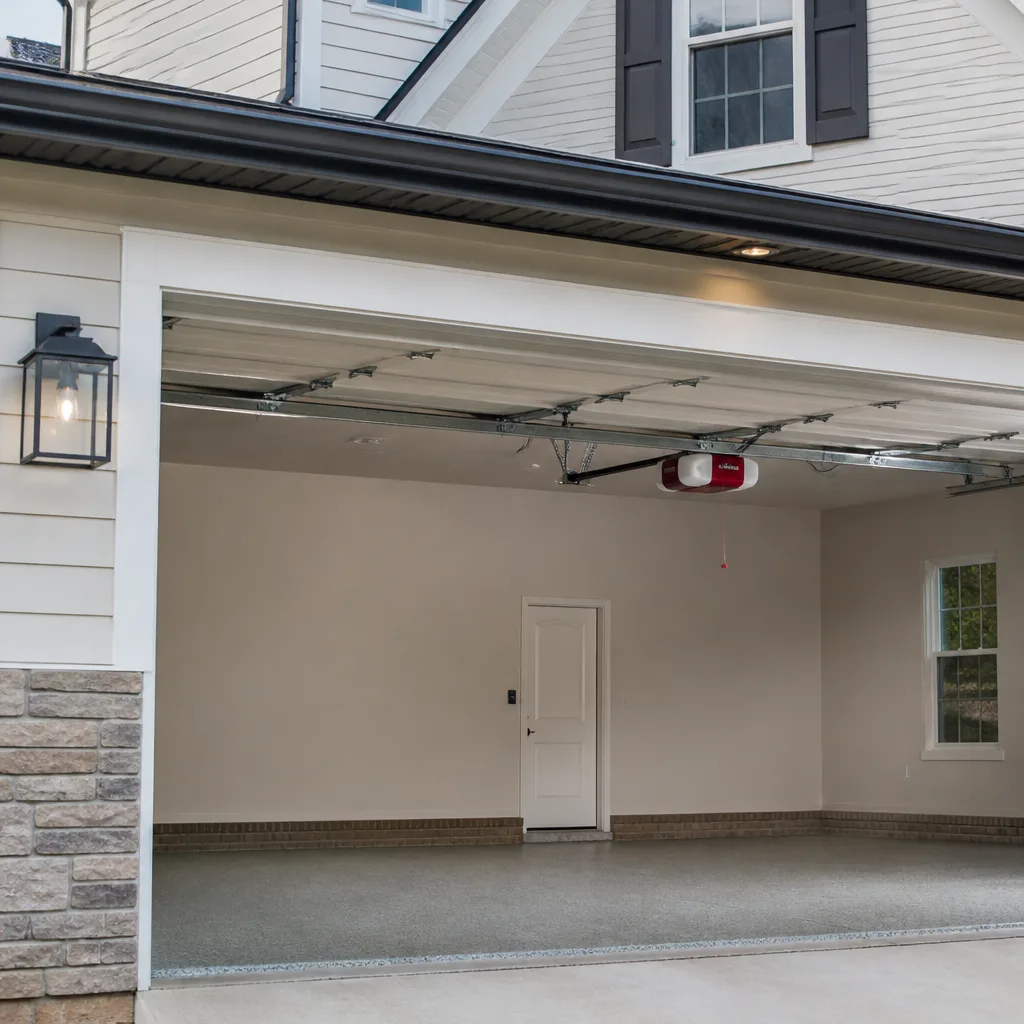
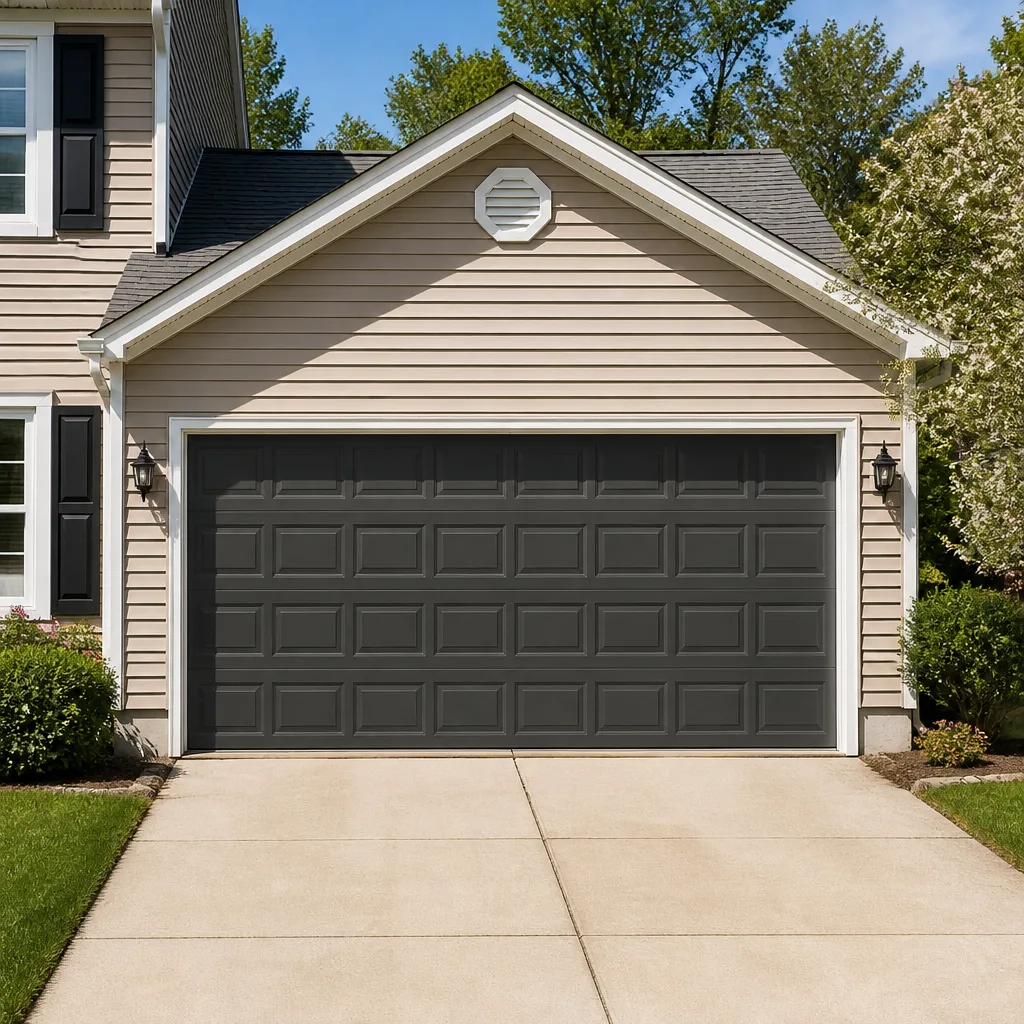 Raised-panel steel
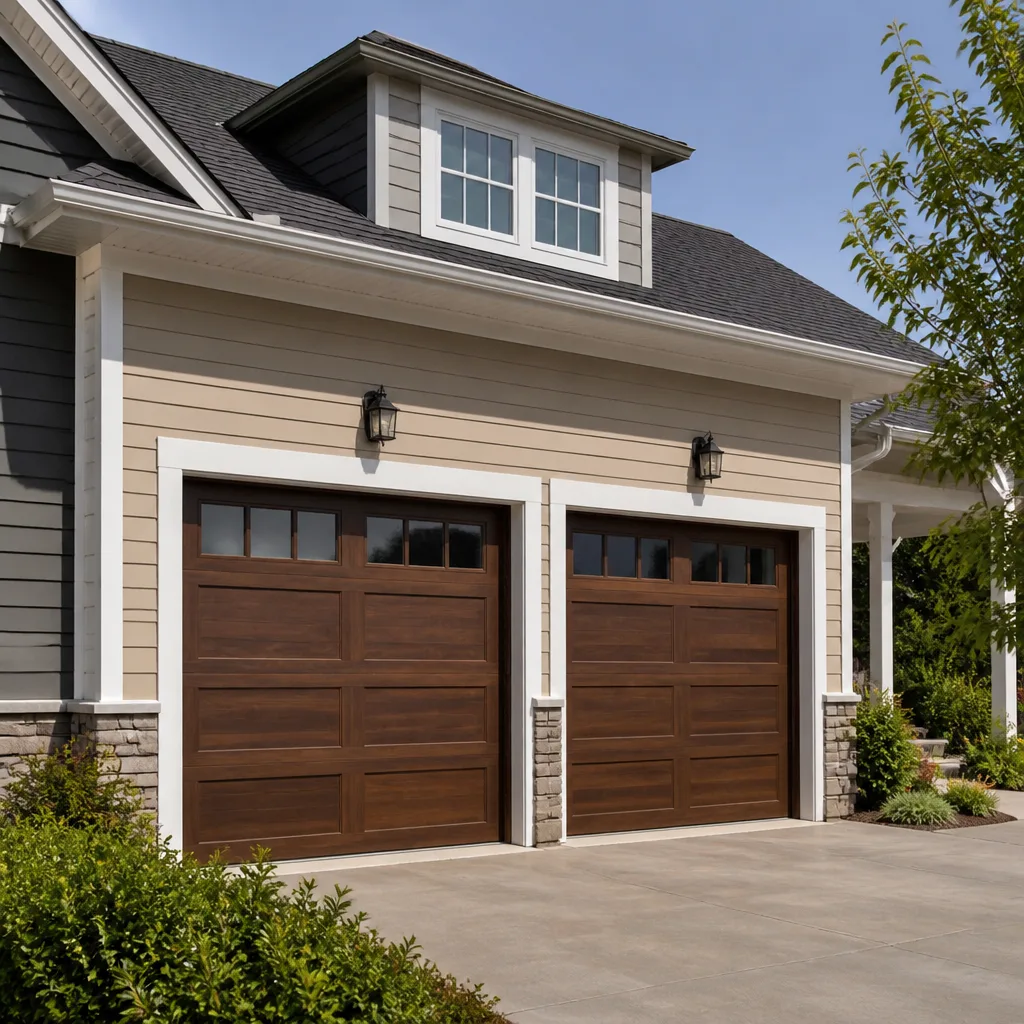
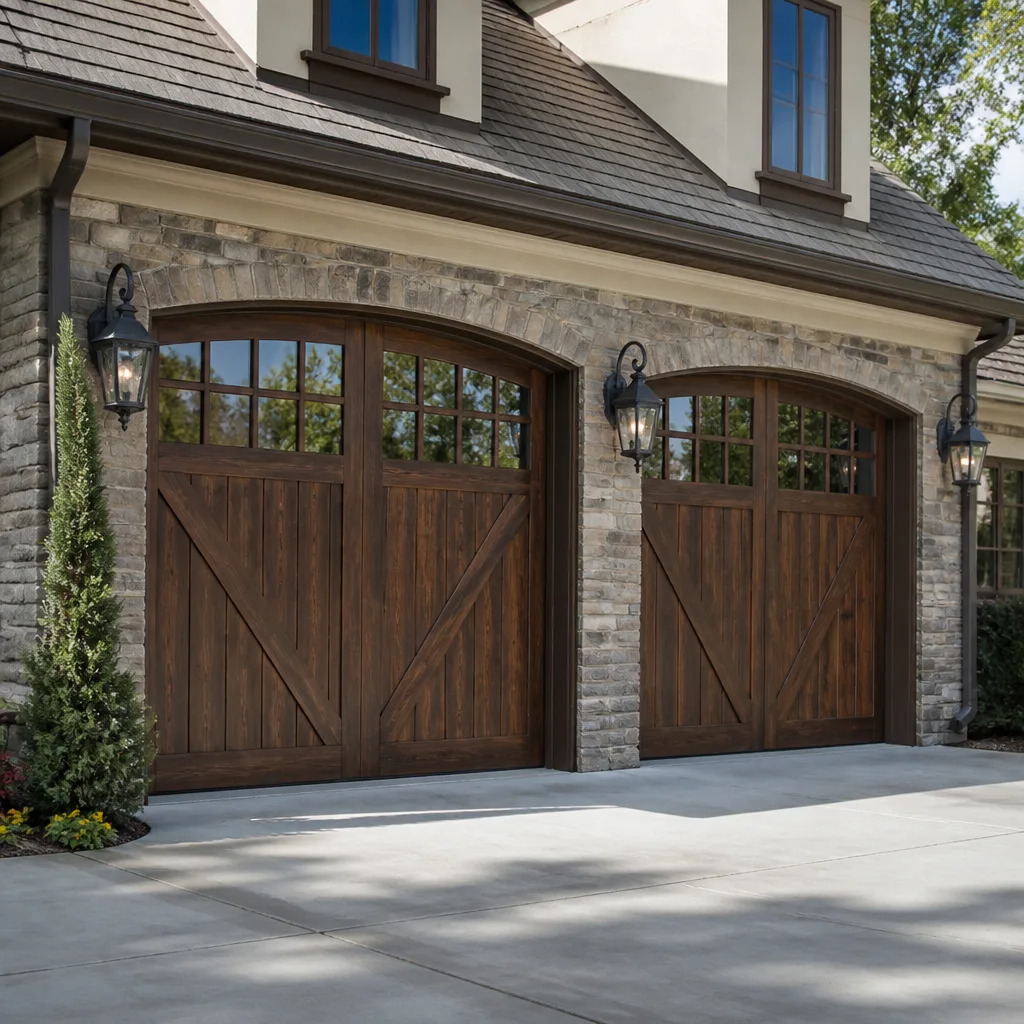 Carriage house
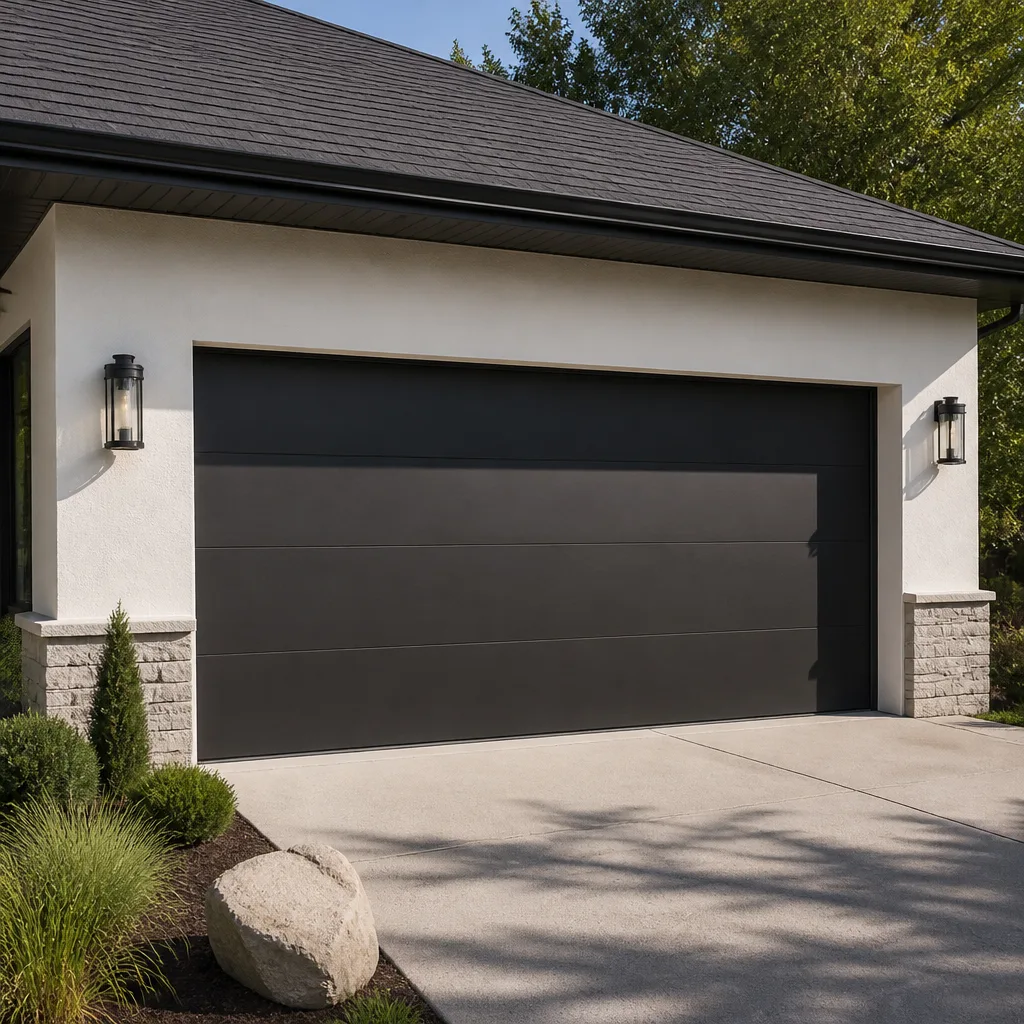 Modern flush
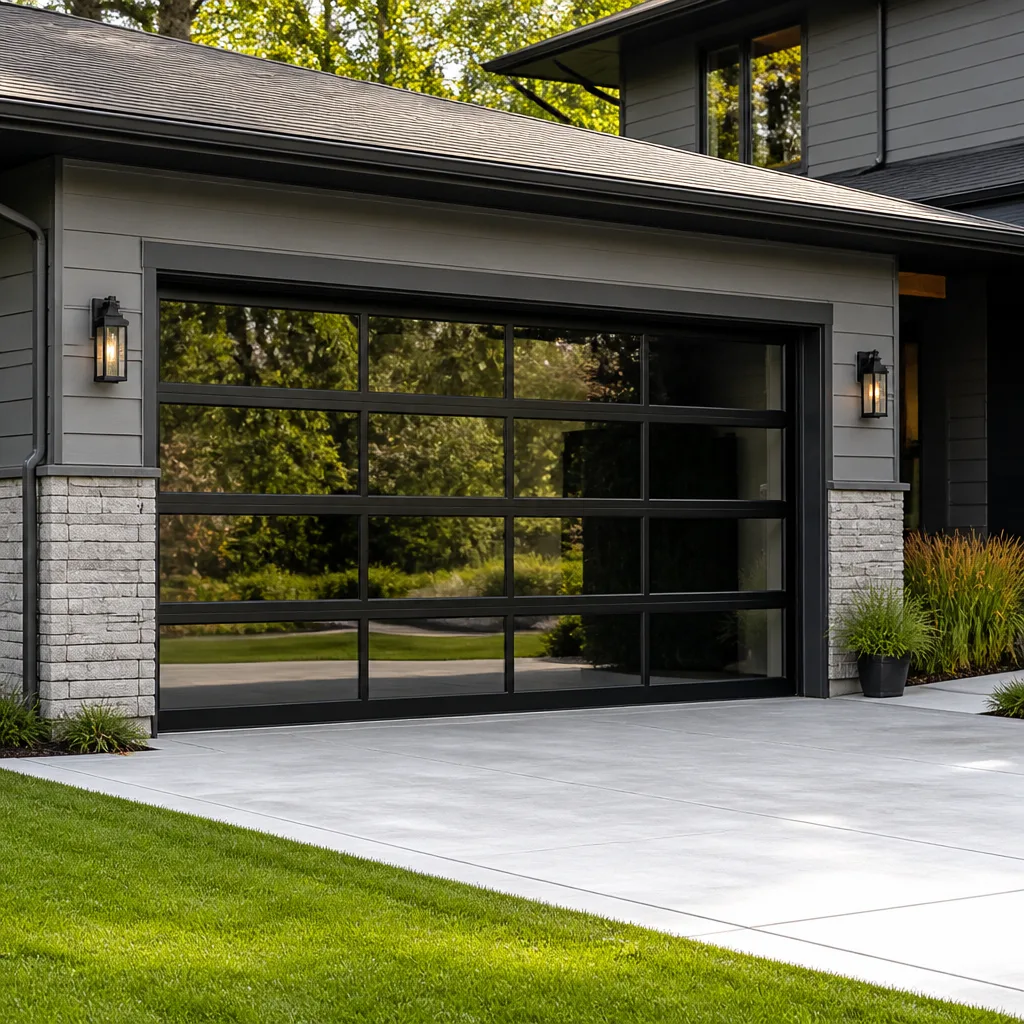 Full-view glass
 LiftMaster openers
 Chamberlain openers
Full 25-point door and opener safety check with every visit - springs, cables, rollers, tracks, and your LiftMaster or Chamberlain opener included
You get a price before we start. It does not change when the pro arrives.
Get your free estimateSeasonal Garage Door Care for Boulder: Year-Round Homeowner’s Guide
Boulder’s March is harder on garage door springs than January. That surprises most homeowners, who assume the coldest month does the most damage. The daily swing from a cold overnight to a mild afternoon puts more cumulative stress on metal components than a steady cold snap does, because the steel expands and contracts over and over instead of settling into one temperature. The same pattern returns in late fall. This guide is built around that reality: the shoulder seasons, not peak winter, are when Boulder garage doors accumulate the most wear. You’ll learn what to check each season, what the local climate does to your door and opener, and when a problem is a job for you versus a job for a specialist.
Quick Answer
The highest-risk period for a Boulder garage door is late fall and early spring, when freeze-thaw cycling stresses springs and cables more than steady winter cold. Focus your seasonal care on those transitions – lubricating moving parts, testing spring balance, and recalibrating opener force settings – and treat summer UV and winter freeze-down as separate, manageable issues. A short inspection at each seasonal shift prevents most of the failures we see.
Styles & brands we work with
- Raised-panel steel
- Carriage house
- Modern flush
- Full-view glass
- LiftMaster openers
- Chamberlain openers
Table of Contents
- Why Boulder’s Shoulder Seasons Do the Most Damage
- Spring Inspection: The Post-Winter Check
- Summer Care: UV, Seals, and Panel Finish
- Fall Prep for Flatirons Wind and Freeze-Thaw
- Winter: When a Door Freezes to the Ground
- Brand-Specific Opener Adjustments
- Boulder Seasonal Maintenance Calendar
- Common Mistakes to Avoid
Why Boulder’s Shoulder Seasons Do the Most Damage
Garage door springs and cables are steel under constant tension, and steel responds to temperature change by expanding and contracting. A steady cold snap keeps the metal at a relatively consistent temperature. A freeze-thaw cycle does the opposite: your door’s springs move through a wide temperature range every single day. Over a shoulder season, that repeated cycling adds up to more cumulative fatigue than a stretch of steady January cold.
That’s the core principle behind how we approach seasonal care in Boulder. Instead of treating winter as the only season that matters, we focus attention on the two transitions – late fall and early spring – when the daily swing is widest. The failure mode we see most often is a torsion spring that held up fine all winter and then snapped in March or April, right when the cycling peaked.
Two things follow from this:
- Spring breakage clusters in the shoulder seasons. Watch for a gap in a torsion spring or a door that suddenly feels much heavier in late fall or early spring.
- Cable fraying accelerates with temperature cycling. Frayed strands at the drums are an early warning that’s easy to catch during a routine look.
Boulder’s elevation and its position against the Flatirons also mean big day-to-night temperature spreads, especially in the spring and fall. A door that lives through that swing year after year is doing real work on its components. If you notice your door struggling at those transition points, that’s the moment to have it looked at – not after something breaks. Our garage door spring repair team handles high-tension spring work as a standard service, and it’s the single most common shoulder-season call we get.
Safety note: torsion and extension springs are under extreme tension and are the most hazardous component of any door system. Never try to adjust, remove, or replace one yourself. A trained technician has the tools and the knowledge to release tension safely.
Spring Inspection: The Post-Winter Check
Once the freeze-thaw cycling of early spring settles into warmer, more stable weather, run a short inspection. This is when the wear from the shoulder season is already visible, and catching it now keeps it from becoming a full failure.
Here’s the sequence we recommend, in order:
- Balance test. Disconnect the opener (use the release cord, and only when the door is fully closed) and lift the door about halfway by hand. A balanced door stays put. If it drops or rises on its own, the springs are out of adjustment.
- Visual spring check. Look at the torsion spring above the door or the extension springs along the tracks. A visible gap in the coil means the spring has broken. Don’t touch it – call a specialist.
- Cable inspection. Check the cables and drums at the sides for frayed strands or slack. Fraying is a warning sign that a cable is close to failing.
- Roller and hinge lubrication. Apply a garage-door-specific lubricant to rollers, hinges, and the torsion spring coils. Avoid heavy grease, which attracts grit on dusty days.
- Track check. Look for bends or debris that could make the door stick. A door that binds puts extra load on the opener.
This whole check takes a few minutes. The balance test is the single most useful one, because it tells you whether the springs are still doing their share of the lifting. If the door feels heavy or slams down, stop using it and call us.
Summer Care: UV, Seals, and Panel Finish
Boulder’s high elevation means stronger UV exposure than a homeowner at sea level might expect. Your garage door faces the sun for a good part of the day, and that sunlight quietly breaks down the two parts most vulnerable to it: the bottom seal and the panel finish.
The bottom seal is the rubber strip along the base of the door. It keeps weather, dust, and small pests out, and it’s the first thing to crack in strong sun. When it cracks, you lose the seal and the door starts to whistle or leak. A cracked bottom seal also lets in cold air in winter, which makes the whole door work harder.
Panel finishes degrade more slowly, but summer is the season to look for early signs: chalky white surfaces, faded color, or fine surface cracks. Catching a failing finish before it becomes a crack means a cheaper repair than replacing a panel.
What to do in summer:
- Inspect the bottom seal for cracks, brittleness, or gaps. Replace it before the fall freeze-thaw season.
- Check the panel finish for chalkiness or fading; a light spray of water on a dirty seal keeps it flexible.
- Clear debris around the base so the seal sits flat and doesn’t tear on grit.
- Lubricate moving parts once the heat settles – summer is a good time, since the door is exposed to the sun all day.
If a seal is beyond saving, replacing it in summer means you go into fall with a clean bottom edge, ready for the freeze-thaw cycle. Clopay and Amarr doors in particular have seals and panels that are easier to source when you’re not in a mid-season scramble. Our garage door repair team can swap a bottom seal or a panel with the right part the first time.
Fall Prep for Flatirons Wind and Freeze-Thaw
Late fall is the other high-risk transition, and in Boulder it brings a specific challenge: the wind that funnels through the Flatirons corridor. Homes with attached garages that back against that corridor get a steady push of wind that works at the weak points of the door’s structure over time.
Wind doesn’t break a door in one gust. It finds the door’s gaps – a slightly loose seal, a worn hinge, a panel that’s begun to delaminate – and steadily widens them. That’s why fall prep for a Boulder home is less about blocking a single storm and more about tightening everything the wind can grab.
Fall tasks, in order:
- Check the weather seal and threshold. A loose or cracked threshold seal gets lifted by wind. Replace it before the first hard freeze.
- Tighten hinges and track hardware. Wind-driven vibration loosens fasteners. A quick pass with a wrench closes the gaps before winter.
- Inspect panel seams. Look for any lifting or delamination along the panel edges, especially on wind-facing sides.
- Lubricate the moving parts ahead of the cold, since cold weather makes lubricant thicken and the door harder to move.
- Run a balance test (see the spring inspection above) so you know the springs are healthy heading into the shoulder season.
The fall prep cycle matters more in Boulder than in a calmer climate, because you’re heading into the freeze-thaw season with a door that has to survive daily cycling. A door that’s been tightened and lubricated in fall is far less likely to surprise you in March.
Winter: When a Door Freezes to the Ground
In a cold Boulder overnight, the bottom seal can freeze to the ground. The door is structurally fine, but the seal is bonded to the concrete by ice. This is when a lot of damage happens, and almost always for the same reason: the manual override mistake.
The mistake goes like this. The door won’t lift, so the homeowner pulls the emergency release cord – the manual override – to disconnect the door from the opener. That’s the right tool for a power outage, but it’s the wrong tool for a frozen door, because the door is still under the spring’s tension and the opener is still expecting to find it. Pulling the release can let the door slam down under its own weight, and re-engaging the opener afterward can strip its drive or throw off its travel limits. That’s how a frozen seal turns into a broken opener.
Here’s what to do instead:
- Don’t force it. If the door won’t lift, stop. Forcing it can tear the seal or stress the opener.
- Break the ice gently. Use a plastic scraper or warm (not boiling) water along the seal to free it. Never use a metal tool, which can gouge the seal and the panel.
- Clear the base of snow and ice build-up so the door has room to move.
- Leave the manual release alone unless you have a confirmed power outage. Once you pull it, re-engaging is a technician job, not a quick fix.
- Call a specialist if the door still won’t move after the ice is cleared, or if the opener has been disconnected.
Once the door is freed, winter is a good time to check the door’s weather seal and the opener’s force sensitivity (more on that below). If a frozen door has left the opener struggling, our garage door opener repair team can re-engage it and reset its travel limits correctly.
Brand-Specific Opener Adjustments
The part of your garage door system that drifts most in cold weather isn’t the door – it’s the opener’s force sensitivity. Most modern openers, including Craftsman and Chamberlain models, have force-sensitivity settings that determine how much resistance the opener tolerates before it reverses or stops. In cold weather, the door gets heavier and parts thicken, and the opener’s force setting can drift. When it drifts too high, the safety reverse stops working the way it should; when it drifts too low, the door reverses for no apparent reason.
This is where brand knowledge matters. Craftsman and Chamberlain openers have their own adjustment procedures, and the force settings aren’t interchangeable. A technician who knows the brand can recalibrate in minutes; someone unfamiliar burns time guessing. Genie and LiftMaster units have their own procedures too, so a good starting point for any seasonal adjustment is knowing which opener you have.
A quick way to check force sensitivity without adjusting anything: place a small object (like a roll of paper towels) in the door’s path and run the door down. The door should reverse on contact. If it doesn’t, the force setting is too high and needs recalibrating.
When to recalibrate:
- After the first cold snap of late fall – the door gets heavier and the opening threshold shifts.
- After a freeze-down or a manual override – the opener’s travel limits may have moved.
- Any time the door reverses for no reason – the force setting has drifted too low.
Brand-specific knowledge means the right part, right fit, first visit. We work on Genie, Clopay, Amarr, and Wayne Dalton equipment as well as LiftMaster, Chamberlain, Craftsman, and Raynor, so we diagnose faster and source correct parts the first time. If your opener is behaving oddly in the cold, a quick adjustment now prevents a bigger repair later.
Boulder Seasonal Maintenance Calendar
Here’s how the tasks above map to Boulder’s four seasons, in a single view. This is a general guide, not a rigid schedule – a door that gets heavy use may need checks more often.
- Early spring (the post-winter check): Balance test, spring and cable inspection, lubrication, track check.
- Summer (the UV season): Bottom-seal inspection and replacement, panel-finish check, debris clearing, lubrication.
- Fall (the Flatirons wind prep): Threshold seal and hinge tightening, panel-seam inspection, lubrication, balance test, opener force check as cold sets in.
- Winter (the freeze-down season): Seal and ice check, opener force sensitivity, manual-release awareness, emergency readiness.
The through-line is that the two transitions – spring and fall – carry the most risk, and the two peak seasons – summer and winter – carry the most specific, manageable tasks. A homeowner who does a balance test and a visual spring check at each transition catches the vast majority of problems before they turn into a broken door or a security gap. A broken door is often a security issue as much as an inconvenience, which is why we treat emergency service as a real offering – same-day response for situations where a stuck or broken door leaves your home exposed.
Common Mistakes to Avoid
A few of these come up again and again on Boulder doors. Getting them right is most of the battle.
-
Pulling the manual release on a frozen door. The emergency cord is for power outages, not frozen seals. Pulling it lets the door drop under tension and can strip the opener when it’s re-engaged.
-
Forcing a door that won’t lift. Grinding the opener or dragging the door free can tear the seal and bend a panel. Free the ice first, then try again.
-
Skipping the shoulder-season balance test. The post-winter balance test is the single best way to catch a weak spring before it snaps in the freeze-thaw season.
-
Trying to adjust a torsion spring yourself. These are the most dangerous component of the door. A DIY adjustment risks serious injury; leave it to a trained technician.
-
Ignoring UV damage to the bottom seal. A cracked seal in summer means a drafty, leaky door in winter. Replace it before fall.
-
Never recalibrating opener force sensitivity. Craftsman and Chamberlain force settings drift in the cold. A door that reverses for no reason, or doesn’t reverse on contact, needs recalibrating.
-
Letting Flatirons wind loosen hardware. A few turns of a wrench on hinges and track fasteners in fall closes the gaps that wind works open over winter.
Every one of these mistakes costs more to fix than to prevent. The good news is that prevention is mostly a matter of a few minutes at each seasonal shift.
See the difference
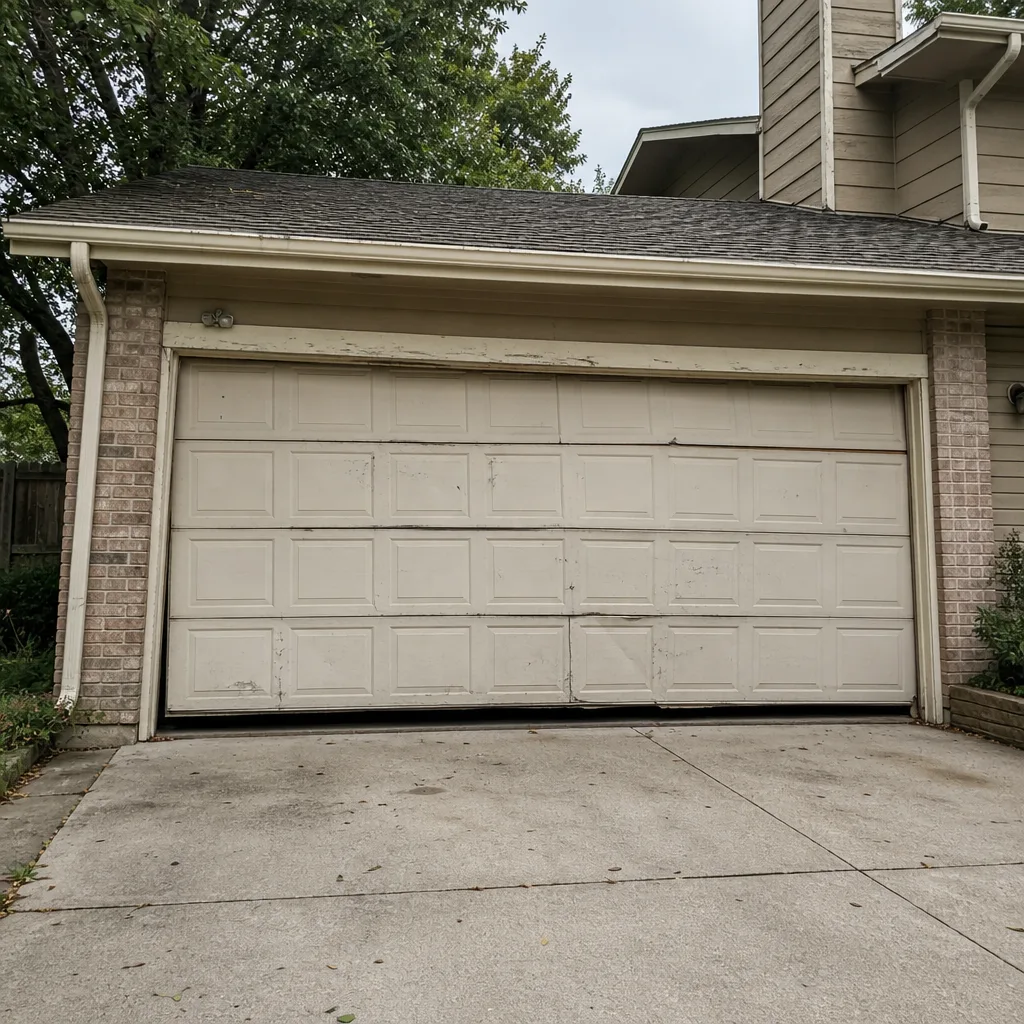 Before
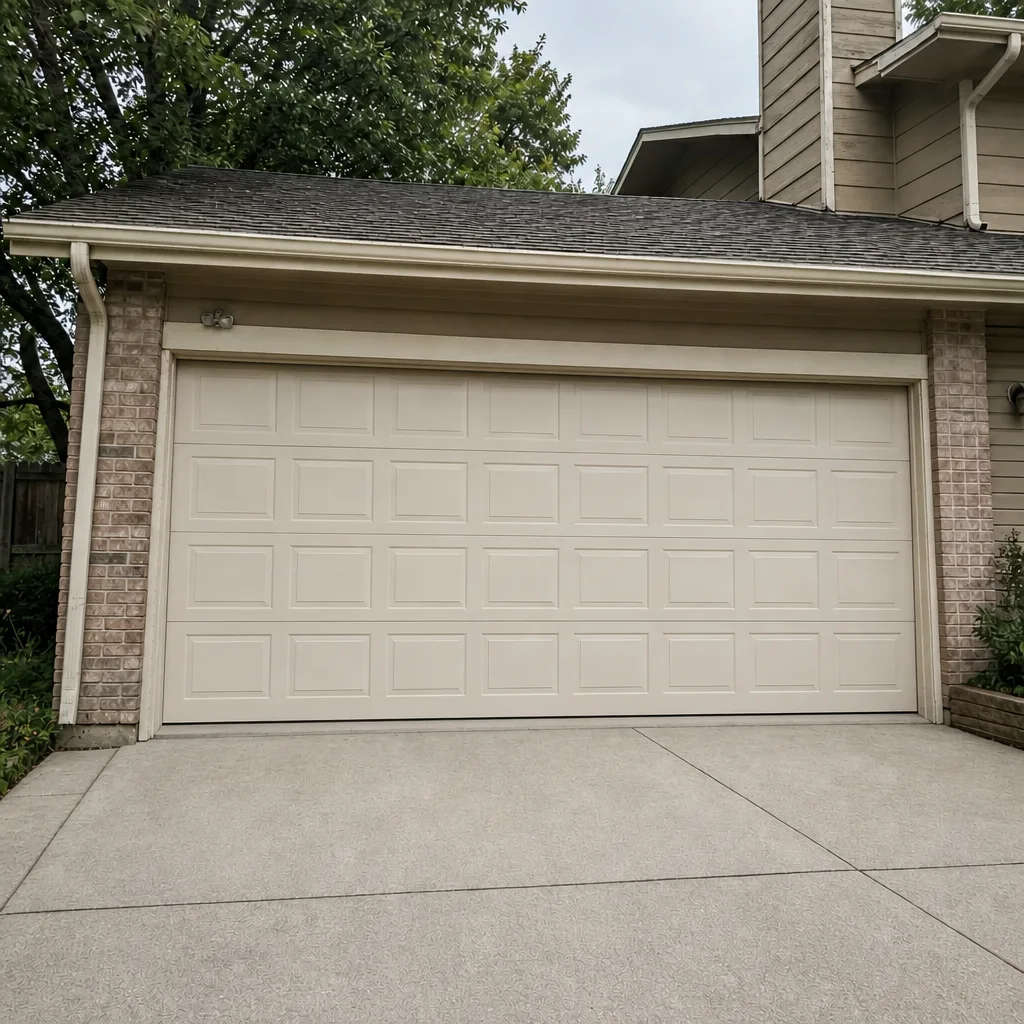 After
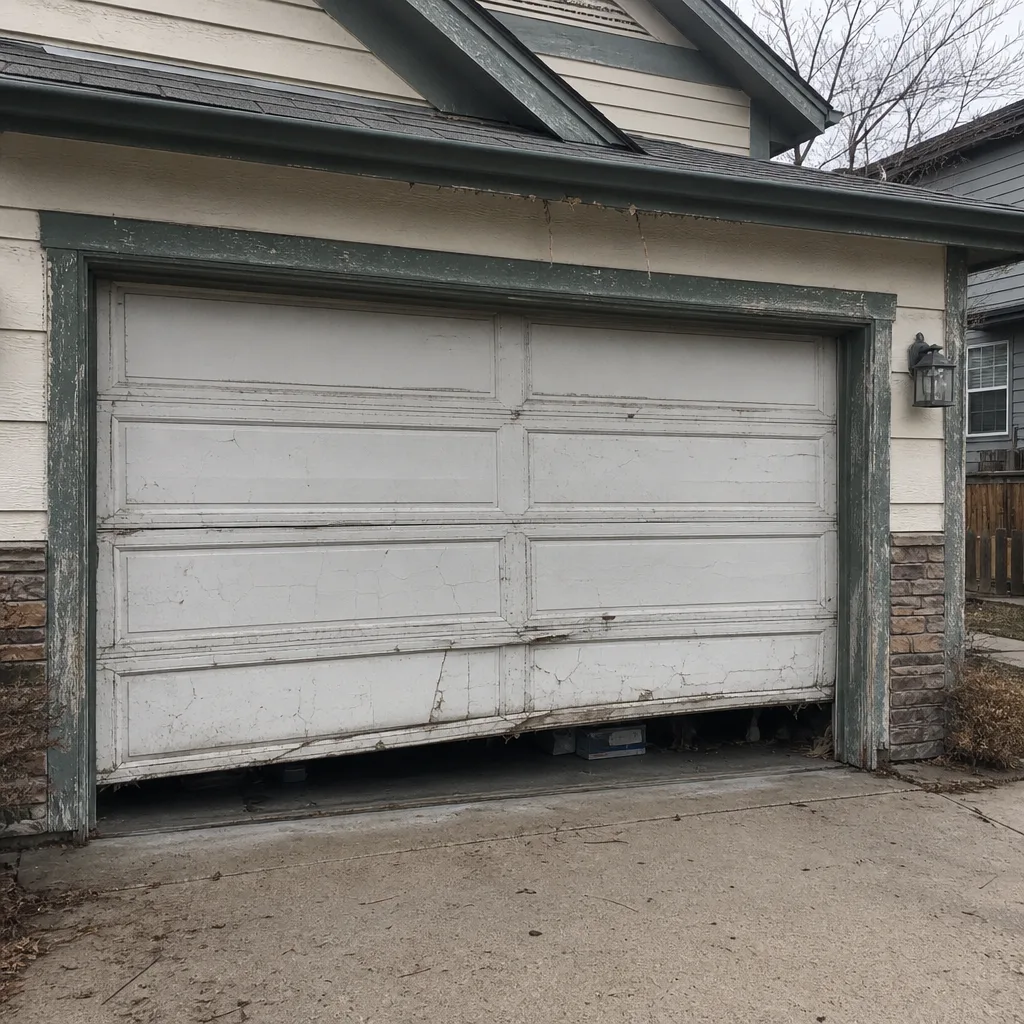 Before
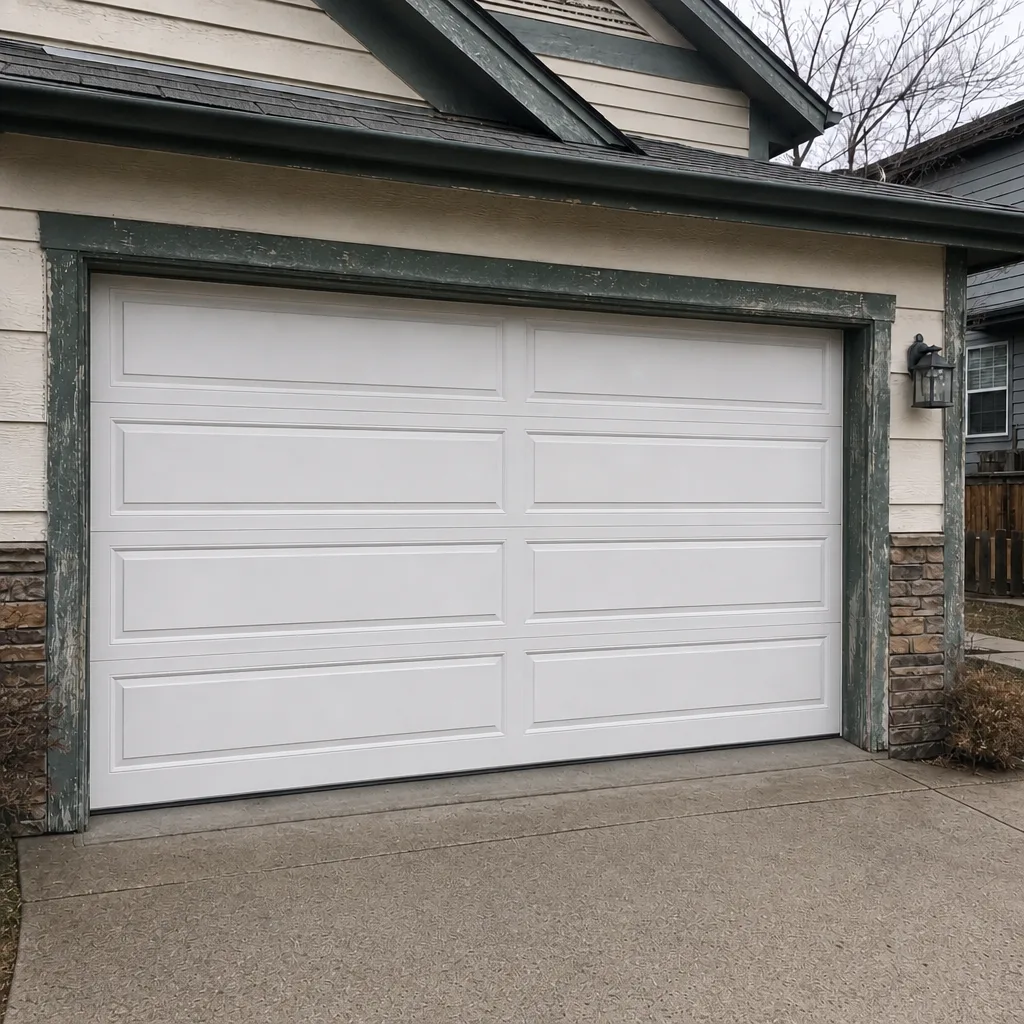 After
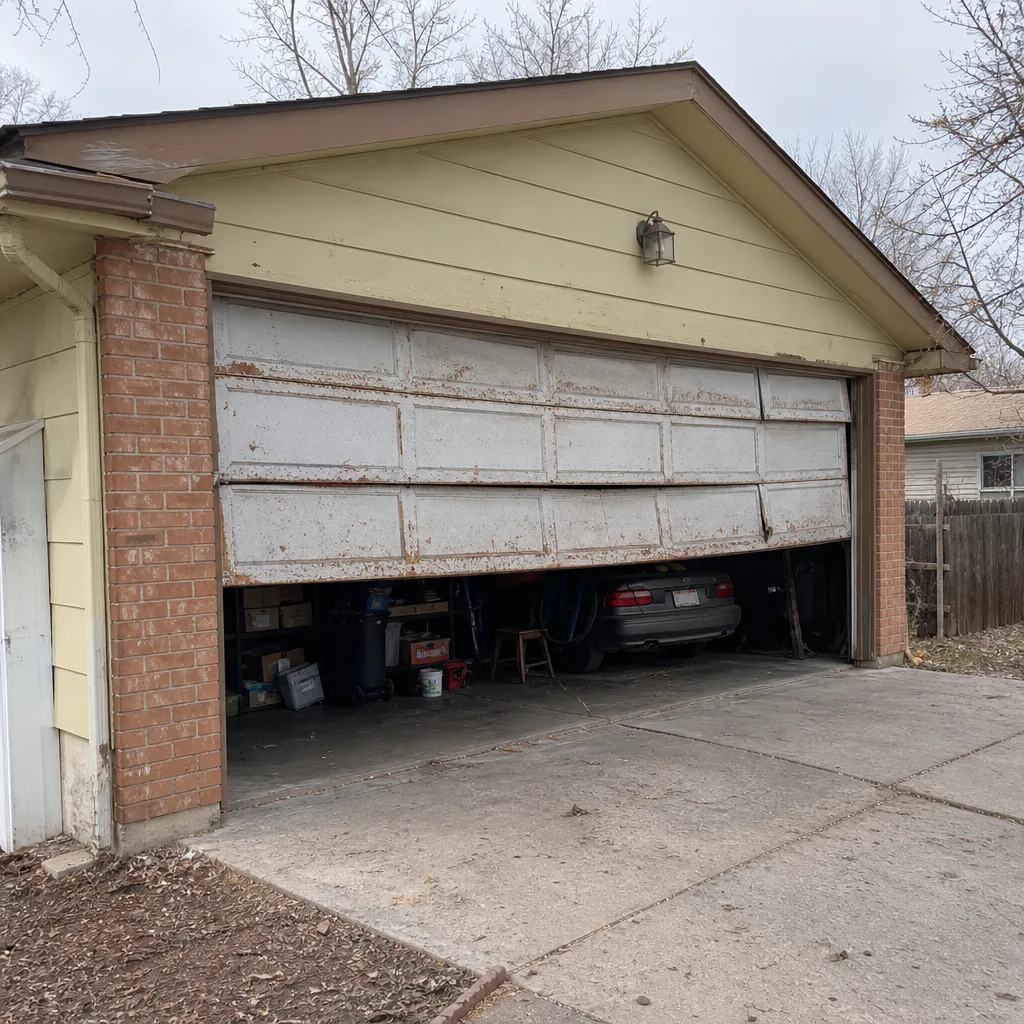 Before
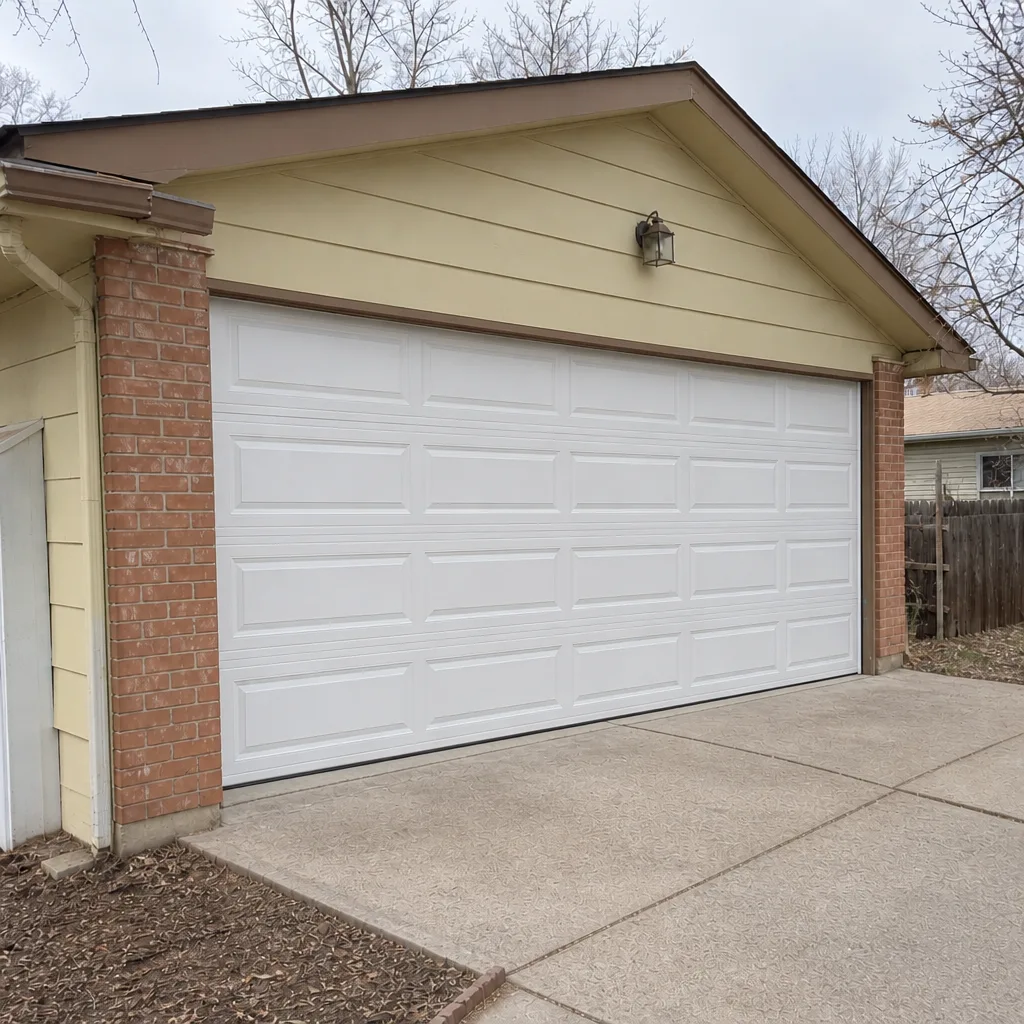 After
When to Call a Professional
Some seasonal care is a homeowner’s job: lubrication, seal checks, clearing ice, and the balance test. Others are a job for a garage door specialist. Call us when a torsion or extension spring has broken, when a cable is frayed or slack, when the door is off its tracks or binding, or when the opener’s force settings won’t hold after a cold snap. Call also when the door has frozen and won’t free up, or when you’ve had to pull the manual release. And if a broken or open door is leaving your home exposed, that’s a security issue rather than a wait-for-an-appointment problem – we offer emergency garage door service for exactly that situation. Our technicians have up to 12 years of experience and every job is priced per the written estimate, agreed before any work starts. Boulder Garage Door Repair Co offers free estimates in Boulder – call (833) 508-9584. We answer 24/7. Fast dispatch from 7am to 7pm, Sunday through Friday.
Frequently Asked Questions
Late fall and early spring are the highest-risk seasons, because freeze-thaw cycling stresses springs and cables more than steady winter cold does. The daily temperature spread during those transitions adds up to more cumulative wear than a single cold snap. That’s why we recommend a balance test and a spring check at each transition. Call (833) 508-9584 for an exact quote if you’re unsure about your door’s condition – estimates are free.
The bottom seal can bond to the concrete in a cold overnight, so the door won’t lift even though it’s fine. Don’t force it and don’t pull the manual release. Free the ice gently with warm water or a plastic scraper, clear the base, and try again. If the door still won’t move or the opener has been disconnected, call (833) 508-9584 – estimates are free.
Often, yes. Craftsman and Chamberlain openers have force-sensitivity settings that drift in cold weather as the door gets heavier, and a door that reverses for no reason or fails to reverse on contact usually needs recalibrating. A professional who knows the brand can reset it correctly. Call (833) 508-9584 for an exact quote – estimates are free.
Once or twice a year is usually enough, timed to the shoulder seasons: a pass in fall before the cold sets in and a pass in spring after the freeze-thaw cycle. Use a garage-door-specific lubricant on rollers, hinges, and spring coils. Call (833) 508-9584 for an exact quote if the door is still stiff after lubricating – estimates are free.
Replace the bottom seal as soon as it cracks, hardens, or stops sitting flat, and do it before fall so you go into winter with a clean seal. UV exposure in Boulder’s strong summer sun is what breaks seals down fastest. Call (833) 508-9584 for an exact quote – estimates are free.
Lubrication, seal checks, clearing ice, and the balance test are safe for homeowners. Spring and cable work is not – torsion and extension springs are under extreme tension, so never adjust or remove one yourself. Call (833) 508-9584 for an exact quote on any spring or cable job – estimates are free.
The Bottom Line
Boulder’s garage doors don’t wear evenly through the year, and the seasons that do the most damage aren’t the ones most homeowners worry about. Late fall and early spring, when the temperature swings widest, are when springs and cables accumulate the most stress. Build your care around those transitions: a balance test and spring check at each one, a seal inspection in summer, a hardware tightening in fall, and a freeze-down plan for winter. Handle the safe tasks yourself, leave springs and cables to a specialist, and the door will hold up through the shoulder seasons that break most of them.
When something’s beyond a homeowner’s check – a broken spring, a frayed cable, a door that won’t close securely – one call covers it all. Call Boulder Garage Door Repair Co at (833) 508-9584 for a free estimate. We answer 24/7. Fast dispatch from 7am to 7pm, Sunday through Friday.
For repairs between seasonal checks, see our Boulder Garage Door Repair Co page, and for a deeper look at garage door repair and opener tune-ups in Boulder, our team is glad to help with an exact written quote before any work begins.
Written by the team at Boulder Garage Door Repair Co.